

By FIW staff.
In 2020, The Queen’s Gambit told viewers that a woman had never competed against men in serious chess competition. At the end of the show’s last episode a commentator says “There’s Nona Gaprindashvili, but she’s the female world champion and has never faced men“, implying that as the “female world champion” she had only won matches against other women. The line was presented casually, as historical background and a fact. It was also false. The truth? At the time depicted, 1968, Gaprindashvili had already played against at least 59 men.
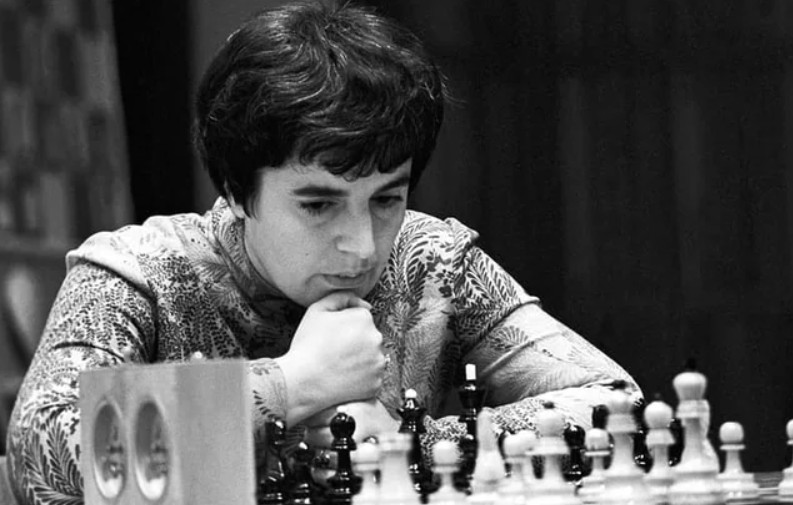
The woman erased by that claim was Nona Gaprindashvili. Not a marginal figure. Not an exception quietly tucked away in footnotes. She was a world champion, a pioneer of modern chess, and by the time the series is set, she had already played and defeated dozens of male grandmasters in international tournaments. This was publicly documented, widely known in chess circles, and never in dispute. The statement in the show was not ambiguous. It was simply a deliberate lie.
Gaprindashvili sued Netflix for defamation. Netflix did not argue that the statement was accurate. Instead, it argued that the line was protected as artistic expression, despite referring to a real person and asserting a factual falsehood about her life. In 2022, a U.S. federal judge rejected Netflix’s attempt to dismiss the case, ruling that the claim could plausibly be defamatory. The case was later settled confidentially. No public apology followed. The episode remains unchanged. That is the factual baseline. Everything else is interpretation.
When Ideology Overrides Reality
The false line about Gaprindashvili was not required by the story. It did not advance the plot. It did not deepen character. It did not heighten drama. Its sole function was ideological.
The series sought to frame Beth Harmon’s success as occurring in a world where men categorically excluded women from competitive chess. That framing collapses under even minimal scrutiny. Chess was male-dominated largely because men participated in far greater numbers, not because women were universally barred. When women did compete at the highest levels, they did so publicly, visibly, and sometimes triumphantly.
Gaprindashvili herself embodied that complexity. Rather than engage with it, the show erased her to produce a cleaner feminist narrative. History was simplified to sharpen the moral contrast.
This is the recurring pattern. When ideology demands a story, accuracy becomes negotiable.
Why Getting the Facts Wrong Was Useful
Labeling The Queen’s Gambit a feminist corrective delivered three tangible benefits.
First, it made the show culturally insulated. Criticism could be dismissed as reactionary or unserious. Second, it amplified media coverage by framing the series as socially significant rather than merely entertaining. Third, it aligned the show with the ideological preferences of award institutions and cultural gatekeepers in the post-#MeToo era.
None of this required the framing to be true. It only needed to be legible.
The irony is that the show itself does not depict systematic male oppression. Beth Harmon is mentored by men, funded by men, trained by men, and supported by male competitors who treat her as a peer. Her primary obstacles are addiction, trauma, and self-discipline. These are internal struggles, not the result of exclusion by men.
That story, however, is not ideologically sharp enough. So history was adjusted to compensate.
Manufacturing Female Grievance
The Gaprindashvili line exposes how contemporary prestige storytelling often operates. Female success is no longer sufficient on its own. It must be framed as success achieved against men.
If men do not actively obstruct the protagonist, obstruction is supplied symbolically or retroactively. In this case, a real woman’s achievements were rewritten to imply that men were the barrier she never faced.
- The process follows a familiar script.
- Complexity is removed.
- Cooperation is reframed as condescension.
- Competition is recast as hostility.
- Historical data is ignored.
- Men, collectively, are positioned as the obstacle.
The result is a worldview in which female achievement only registers if male achievement is diminished.
The Polite Normalization of Anti-Male Narratives.
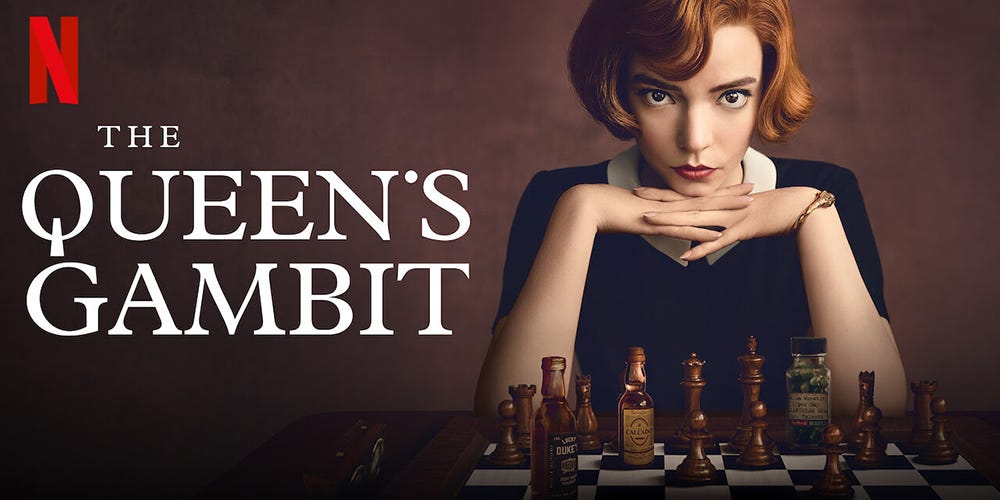
What makes The Queen’s Gambit instructive is not overt hostility toward men. It is the opposite. The message is delivered politely, wrapped in craftsmanship, prestige, and restraint.
Men are allowed to help, but rarely to matter. They are competent, but never central. Even when they support Beth, their role is framed as something she transcends rather than something shared. The crucial move comes when a historically accurate, male-inclusive reality is replaced with a false exclusionary one.
This is how anti-male sentiment spreads in contemporary culture. Not through caricature or rage, but through omission, distortion, and repetition.
The Gaprindashvili case is not a trivia dispute. It is a warning.
When major cultural institutions decide that ideological clarity matters more than factual accuracy, they do more than misrepresent the past. They train audiences to misread the present. Viewers are encouraged to assume injustice by default, to treat male participation as suspect, and to interpret female success primarily through grievance.
Cinema no longer merely reflects social beliefs. It actively manufactures them.
When those beliefs are built on falsehoods, especially falsehoods that erase cooperation between men and women, the damage is cultural, not cosmetic.
Facts Are Not Optional
There was no need to lie about Nona Gaprindashvili. Her real story was already extraordinary. Truth, however, did not serve the ideological arc the show wanted to sell.
That decision reveals the underlying mechanism. Feminist ideology in contemporary prestige media is not merely a viewpoint. It is a production strategy. It helps projects get greenlit, promoted, protected, and rewarded. When reality does not cooperate, reality is revised.
If audiences want honest storytelling again, stories that treat men and women as collaborators rather than adversaries, the demand must begin with something unfashionable and increasingly rare.
Facts first.
Please read our in depth analysis of The Humiliation of Men in Cinema, here.


Related Posts

2 Comments
-
-
Film Industry Watch
Thank you for your comment. We appreciate you taking the time to engage seriously with the piece. We are not entirely convinced by the comparison. Yes, there have long been female stereotypes in cinema: submissive women, ornamental roles, one-dimensional love interests. That is true. But cinema has also given us many strong, intelligent, capable female characters for decades, long before the current ideological moment. Princess Leia in Star Wars (1977), Ripley in Alien and Aliens, and Sarah Connor in The Terminator are obvious examples. More importantly, our point is not simply about whether a gender was ever portrayed badly on screen. The real issue is institutional incentive. We do not believe films were historically selected for major awards, promoted, or culturally protected because they humiliated women or diminished female competence as part of an approved ideological framework. That is a different phenomenon. What concerns us today is not the existence of flawed male characters, which has always been part of storytelling, but the repeated cultural reward for narratives that diminish men as a class, erase male-female cooperation, or treat male disposability as sophistication. That is what we are examining. So while we understand the historical point you are making, we do not think it is fully parallel to what is happening now.
-

Oscar
I appreciate the article *a lot* actually, because there is an important discussion to be had about ideology scewing how we look at men currently very unfavorably. There surely are numorous cases like this one, reframing male characters an diminishing their importance or positive character. However, not even mentioning that this is exactly how female characters have been treated since the beginning of movie making - which has only shifted in very recent history - is in itself very ideologically charged. It's not that it is particularly of importance; but still the avoidance of acknowledging that fact leaves a foul taste. - a man