

In a development that should surprise no one who has followed our ongoing coverage of the Sundance Film Festival, new information has come to light painting a troubling picture of the festival’s continued dilution of filmmaking excellence. The allegations, which come from a longtime festivalgoer and local Utahn, further bolster the criticism that Sundance’s emphasis on “discovery” and “independent cinema” is little more than a front for its profitable insider network.
Sundance has never been about championing quality films. It’s essentially insider trading of filmmaking. The [friends of the] same people that run Sundance have investments in the films that win.”
An insider explains:
Search ‘Sundance labs emergency funding the Witch’ and it should come up. Basically Sundance labs is their “for profit non profit side” of things. So you have a little bit of funding and you need more so you got Sundance and they will invest in your film and connect you with investors they know. Then they turn around and let your film win Sundance as marketing for it. And they claim to be non profit but they are all double dipping on the for profit side of things
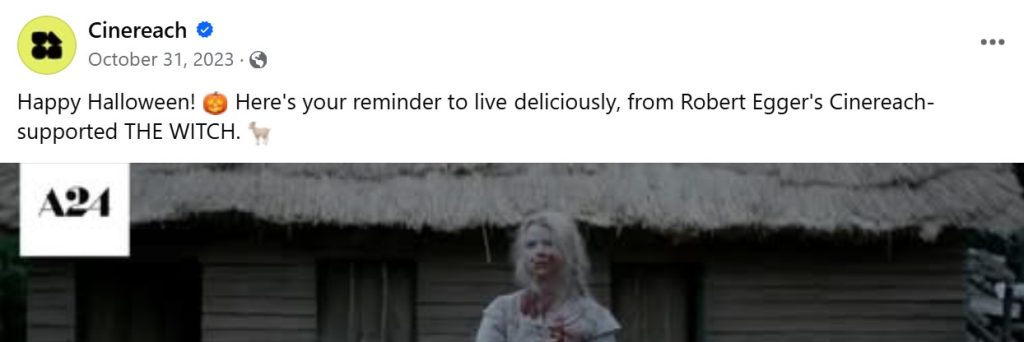
As mentioned above, as an illustrative example shared by the source, is Robert Eggers’ The Witch. While the film went on to garner critical acclaim, the narrative behind its “win” at Sundance paints a questionable picture:
It received emergency funding from Sundance’s close friends. Then it goes to somehow win the non-profit Sundance competition. This is all public knowledge.”
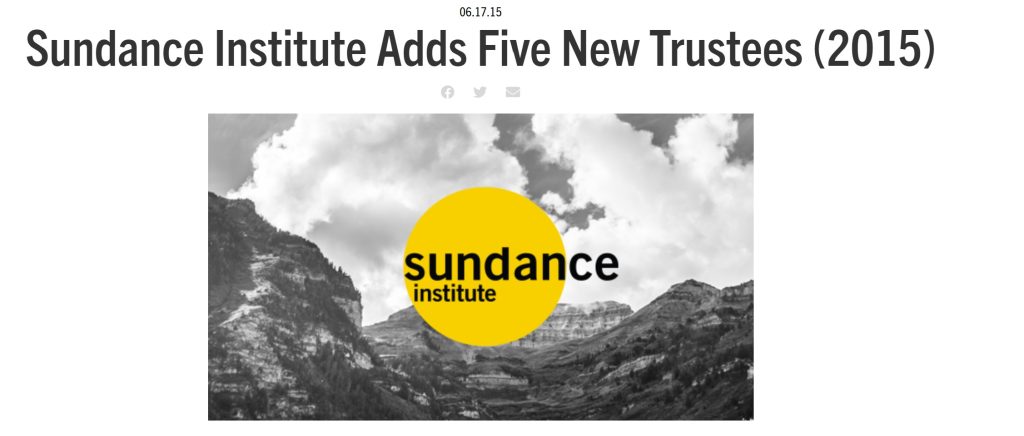
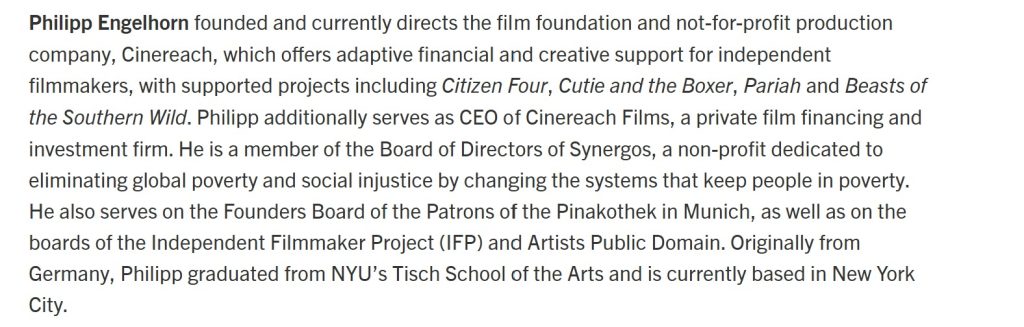
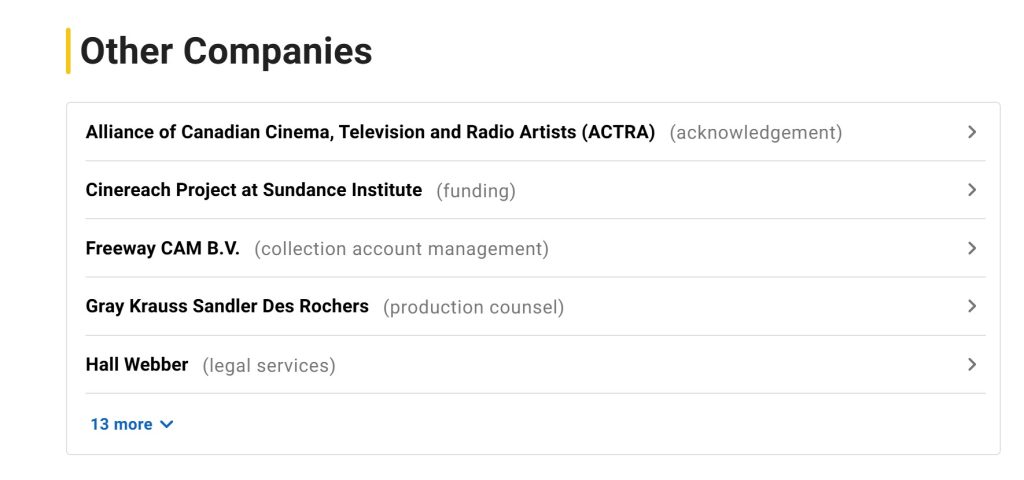
It appears that the allegations stem from the fact that the CEO at the time of Cinereach, a nonprofit production company involved in financing The Witch (now former CEO), also served as a Trustee of the Sundance Institute. Notably, the film was released in 2015, the same year the CEO joined the festival’s board of Trustees. As a nonprofit organization, Cinereach relies on philanthropic funding and pays salaries to its employees. However, when a nonprofit production company is closely linked to a film festival, particularly with its CEO serving as a Trustee, and the festival awards recognition to films produced or financed by that company, it raises legitimate concerns about a potential conflict of interest. The film received a grant from the Sundance Institute, was subsequently programmed, and later awarded at the festival. While such practices may be considered “business as usual” in the film industry, it is largely because such dealings have been normalized over time. Many tens of thousands of filmmakers are trying to receive recognition in film festivals, not having their producers on the board of Trustees of the same festivals.
 |   |
Why This May Be Seen as a Conflict of Interest
A conflict of interest arises when an individual in a position of authority or influence (in this case, a Trustee at a film festival) has personal or professional ties to certain projects that the festival supports or awards. For critics, the concern is that the decision-making process—whether it involves choosing which films receive grants, which are programmed, or which earn festival awards—could be swayed by relationships and vested interests rather than by purely artistic or meritocratic considerations.
- Power and Influence: Trustees of a major festival like Sundance often have substantial clout in deciding or influencing programming, funding priorities, and award selections. If the same Trustee also helms or financially benefits from a production entity financing a competing film, questions arise about whether it truly receives impartial evaluation.
- Nonprofit Status: Both the festival (through the Sundance Institute) and Cinereach operate under nonprofit models. Nonprofits are generally expected to adhere to higher standards of transparency and ethical responsibility, precisely because they benefit from philanthropic and public trust. The appearance of any intermingled financial or career interests can erode that trust.
- Limited Opportunities: Many filmmakers vie for the chance to premiere and compete at prestigious festivals like Sundance. When a film associated with a powerful insider is seemingly “fast-tracked” or favored, even by appearance, it can discourage or overshadow deserving independent films that lack comparable connections.
- Normalization of Industry Practices: The film industry has long tolerated a degree of nepotism and insider dealings, often shrugged off as “just how things work.” However, such practices can leave the door open to real or perceived conflicts of interest, which, if unaddressed, may further entrench a system that primarily benefits those with direct ties to industry power brokers.
The Quality Conundrum: 500 Shorts, Only 5 Worth Remembering?
Our source, who has attended nearly a decade’s worth of Sundance screenings, especially shorts, paints a grim picture of the festival’s creative standards:
Out of the probably 500 I have seen at Sundance now, I would say only 5 are memorable or quality. Your average Vimeo staff pick is lightyears better than your average Sundance short.”
This anecdote aligns with previous criticisms that Sundance has shifted focus away from curating truly stellar works, favoring projects that satisfy strategic, political, or financial interests. By maintaining a large pool of subpar or formulaic films—“checking off certain criteria” for feel-good representation or activist branding—the festival can ensure that the heavily promoted favorites (in which Sundance insiders may have a stake) stand out by comparison.
A Self-Fulfilling Prophecy of Mediocrity
According to these allegations, Sundance’s programming strategy is less a quality-driven selection process and more a carefully managed spectacle designed to bolster the success of films in which the festival’s insiders are already invested. This environment, critics say, not only robs deserving talent of their moment in the spotlight, but also erodes the public’s trust in what should be a champion of cinematic innovation.
My conspiracy theory is they intentionally get ‘bad’ films that check off certain criteria… to make sure the films they have investments in win.”
A Call for Greater Accountability
Our stance at Film Industry Watch has been and remains clear: festivals must be bastions of authenticity and meritocracy, offering a fair platform for emerging artists. The allegations of an “entertainment-based pyramid scam” strike at the heart of what film festivals are meant to represent, a celebration of creativity unfettered by cronyism and corporate machinations.
We sincerely thank our readers for consistently sharing valuable information with us. We will update the article as we verify the information further and gather additional details.
Sources:
https://www.sundance.org/blogs/news/sundance-institute-adds-five-new-trustees-2015/
https://www.imdb.com/title/tt4263482/companycredits
Legal Disclaimer:
The allegations referenced in this article are based on publicly available information, individual testimonies, and third-party sources. Nothing contained herein should be construed as definitive proof of wrongdoing, nor as legal, financial, or other professional advice. All opinions expressed are those of the respective sources and do not necessarily reflect the views of this publication. We make no representations or warranties regarding the accuracy, completeness, or reliability of the information provided, other than the information contained in the sources. Readers are encouraged to conduct their own research and consult appropriate professionals for advice specific to their circumstances. The publication disclaims all liability for any loss or damage arising from reliance on the information contained in this article.



John C
Great article. Truly eye opening.