

“Judge a person not by their merit, but by the color of their skin, gender, and their sexual orientation”
In an era when diversity initiatives are hailed as a saving grace for the entertainment industry, independent filmmaker Cinema Timshel contends he has been pushed to the margins. Timshel, a documentarian based in Minneapolis, believes an emerging ideology he calls “identitarian social justice” is erecting new barriers, even as it aims to eliminate old ones. His story, particularly the years-long struggle to gain festival traction for his documentary No One Left to Offend: The Rise and Fall of the Church of Euthanasia, underscores the complexity of identity-based policies and the disputes they spark.
Below is a closer look at the trials Timshel encountered while trying to screen his film, along with his broader claim that such difficulties are no coincidence. In his view, he is a casualty of policies and cultural attitudes that use racial and gender criteria to decide who gets a seat at the table, an issue we’ve touched upon both a year ago, and recently.
Being a Straight White Able-Bodied Male as a Major Disadvantage
Timshel is the first to acknowledge that the very idea of a white man being discriminated against in Hollywood raises eyebrows. Legendary directors – Spielberg, Scorsese, Nolan, and the Coen Brothers, to name a few – are still household names. And with that lineup dominating screens, skeptics wonder how Timshel can argue white men face any systemic roadblocks at all.
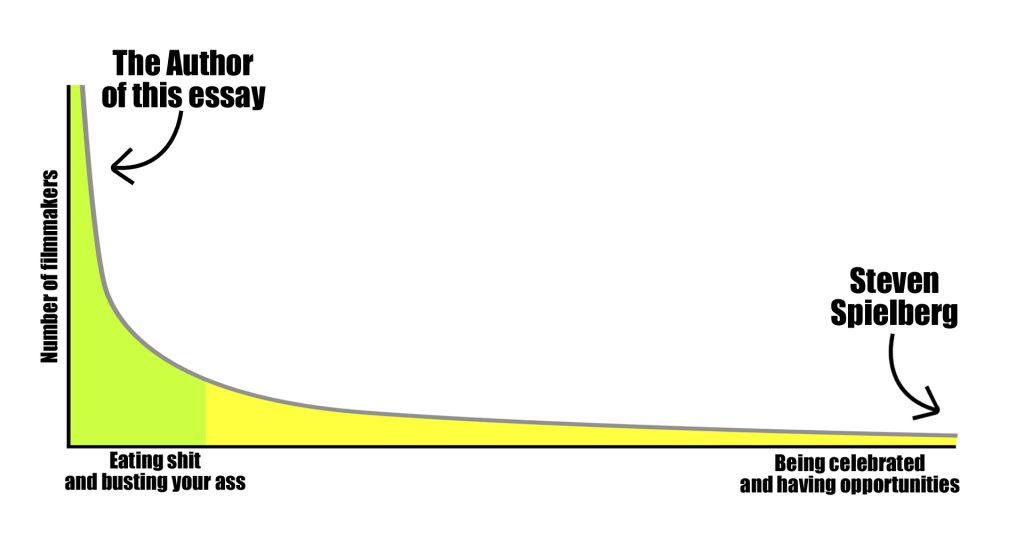
His answer is straightforward: “Everybody has to start somewhere.” While powerhouse talents can ride industry clout or brand-name success, Timshel says emerging white male filmmakers get a drastically different reception in an indie market he calls “rigged.” A wide range of arts nonprofits, film festival boards, and public grants, in his view, have codified “diversity, equity, and inclusion” (DEI) mandates in ways that exclude or sideline creators like him.
Their sin? Being born male, white and able bodied.
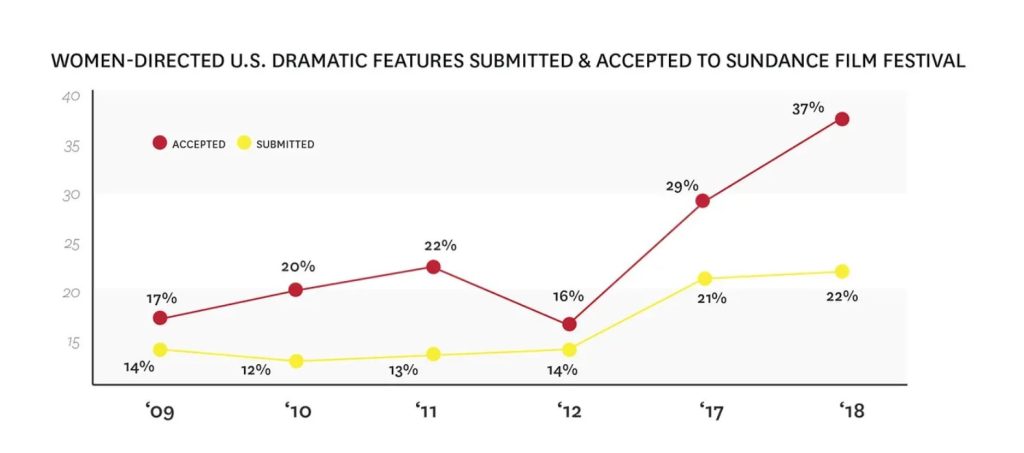
Despite finishing a previous documentary in 2014 and laboring for years on his latest project, Timshel says he has been rejected by every major film lab, grant, and festival to which he has applied in the past decade. While rejections are hardly rare in the competitive festival world, he insists the deck is stacked against him. He describes combing through festival lineups and funding announcements, only to find a conspicuous lack of white male directors compared to the portion who actually submit work.
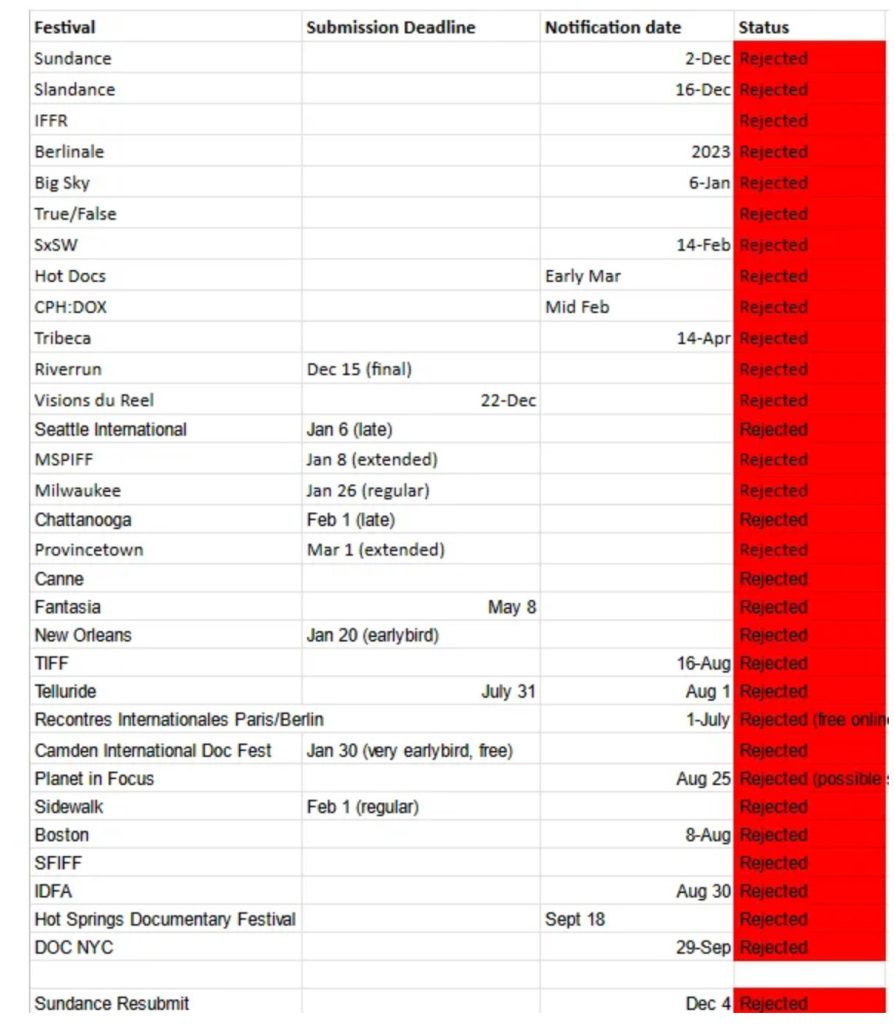
Timshel points to one curious exchange that occurred while submitting No One Left to Offend to Sundance in 2022. To his surprise a longtime programmer reached out midway through deliberations, praising his film as “fascinating” and “wild,” and wondering if it should be entered as an episodic series rather than a traditional feature. Yet after that brief flurry of enthusiasm, No One Left to Offend was rejected – along with Timshel’s subsequent attempts to follow up.
He doesn’t claim outright proof of conspiracy; festivals have myriad reasons for turning down films. Yet Timshel describes the subsequent silence from that Sundance programmer, and thirty additional rejections from other festivals, as emblematic of an unspoken policy: programmers might like or even admire a project but fear wading into controversy that risks offending the ethos of identitarian social justice.
On paper, Timshel’s documentary covers raw, even outrageous, ground, enough to make any mainstream gatekeeper hesitate. No One Left to Offend chronicles the 1990s exploits of the Church of Euthanasia, a crew of performance artists and MIT engineers led by the cross-dressing provocateur Chris Korda. The group championed abortion rights and environmental awareness by staging intentionally inflammatory spectacles: carrying signs like “Eat a Queer Fetus for Jesus,” lampooning corporate greenwashing at Earth Day events, and even setting up a giant puppet that mimicked male ejaculation—just to mock a sperm bank.
Their slogans included “Save the Planet, Kill Yourself,” reflecting the group’s bizarre brand of performance-art activism. They provoked anti-abortion activists, confronted conservative Catholics, and boasted about sowing media confusion as a form of cultural sabotage. Timshel’s film, which runs more than two and a half hours, captures this spectacle in warts-and-all detail, offering neither condemnation nor apology.
Korda’s views add another layer of tension in a cultural environment sensitive to trans portrayal. Timshel’s footage shows Korda questioning medical transitions, calling them expensive and confining. Yet Korda also identifies as transgender and cross-dresses. This complicated stance—more personal rebellion than typical trans narrative—might not fit neatly into the identity-first frameworks common in certain film circles.And then there’s Nina Paley, an animator who appeared alongside the Church of Euthanasia on The Jerry Springer Show. Paley has been labeled a “TERF” (trans-exclusionary radical feminist) by her critics, spurring canceled screenings of her work and a permanent tarnish in many festival environments. Timshel keeps her in the final cut, though he wonders if her presence in the film has made it institutionally radioactive.
The Larger Landscape of Identitarian Social Justice
Early in his career, Timshel was involved in left-wing activism, including the Occupy Wall Street movement. At first, he relished what he saw as a populist wave concerned with class struggle and corporate power. But he recalls that over time, many activist circles devolved into bitter “oppression olympics,” where allegations of racism or sexism would lead to swift excommunications. According to Timshel, once that culture took hold, new rules on speech and identity grew so rigid that deeper issues of class, poverty, or free expression were drowned out.
He now sees that pattern replicated in institutional film. The new era, Timshel says, is dominated by the language of DEI—“diversity, equity, and inclusion”—but often operates like a pseudo-religion, zealously policing dissent. Organizations from The Ford Foundation to local nonprofits regularly tout achievements such as supporting “QTIBIPOC” creators (an umbrella acronym for Queer, Trans, Indigenous, Black, and People of Color). Timshel argues these well-meaning programs effectively erect a fresh set of identity-based quotas.

Timshel points to sensational stories like the uproar over Meg Smaker’s Jihad Rehab—a film labeled Islamophobic and hammered by critics who had never seen it. Though Jihad Rehab eventually premiered at Sundance, subsequent festivals withdrew. Smaker’s ordeal, Timshel believes, underscores the underlying fear: if your film is even rumored to “punch down” at a marginalized identity, it becomes a liability.
By contrast, Timshel says his own predicament has been more hushed but no less devastating. His sense is that festival programmers who appreciate his work still won’t risk an outcry. No One Left to Offend, featuring a trans protagonist with unorthodox opinions on gender, simply isn’t “the representation that trans people need right now,” as Timshel imagines the hypothetical critique.
Is it DEI or Discrimination?
In Timshel’s telling, the dilemma revolves around who determines “merit.” He concedes that Hollywood’s past shut out too many marginalized filmmakers and can be slow to respond. But he sees current practices as overcorrection—or worse, fresh prejudice disguised as progress.
He cites numbers from Sundance: in recent years, the percentage of female directors programmed in certain categories has often outstripped the percentage of female submissions. He also references press releases from arts nonprofits that highlight successful fellows by race, gender, and sexual orientation but rarely mention how many white men even made it past first-round eliminations.
Timshel wonders whether listing his own fractional Indigenous ancestry or calling himself “nonbinary” would have opened doors. Or if he’d relinquished directing credit and showcased a female co-creator, might the film have passed muster? Such hypothetical scenarios trouble him, suggesting a system that rewards the correct “checkboxes” above artistic excellence or curiosity.
A Storm in the Industry
Timshel’s frustrations highlight a broader reality for filmmakers of every background: the traditional pipelines for independent film—festivals, distributors, philanthropic grants—are narrowing. The streaming revolution has turned once-lucrative distribution deals into pennies per view. Younger audiences now favor social media over cinematic experiences. Meanwhile, philanthropic capital is guided by mission statements that Timshel says increasingly bow to the strictest version of social-justice orthodoxy.
That confluence, in his view, is choking out experimental or boundary-pushing work, especially if made by individuals who don’t align with the day’s favored identities or messaging. And while Timshel acknowledges that creators who aren’t white and male historically faced these headwinds, he sees the current approach as compounding the industry’s distress. In Timshel’s view, the cinematic establishment is letting old inequalities define decision making while punishing a new generation for crimes they never committed and benefits they never received.
Timshel foresees a bleak outcome: a splintered film culture where permissible “wokeness” is the ticket to mainstream festival approval. The danger, he warns, is that it may spark an equal and opposite backlash. He points towards the way white nationalism can thrive on feelings of betrayal, noting that marginal extremist groups can weaponize the resentments that DEI policies produce. Even more pressing to him is the death of robust artistic freedom—particularly in indie documentary, a genre that should probe complicated truths and uncomfortable stories.
Victimized by the “Flipped Script”
Critics of Timshel might ask if he’s just bitter about rejections or is blaming identity politics for a film that simply didn’t fit festival needs. But his record—and the personal praise from at least one top-tier programmer—suggests he might well be a casualty of an unwritten rule: “Don’t run material that could trigger controversy from the social justice left.”
He frames himself as a victim of an ideology that not only discriminates by race and gender but stifles common sense. Questions like “Should a documentary about a complicated trans figure get banned because it’s not the ‘right’ kind of trans story?” seem far from progressive in Timshel’s eyes—yet they reflect the closed-door climate he describes.
He is adamant that female and minority filmmakers deserve equitable access and expanded opportunity, but he believes that must not entail reverse discrimination. Referencing Martin Luther King Jr. and David Graeber, Timshel urges the film world to abandon gender and race based blame for past sins and focus on universal fairness and expanded opportunity for all. “It shouldn’t be about pushing anyone out,” he says, “the point is about making space for everyone without punishing entire categories of artists.”
Refusing to rely on festivals, Timshel plans to release his documentary online, possibly in segments behind a modest paywall. Although the marketing power of a big festival slot can’t be replicated through DIY distribution, he hopes that word of mouth will help him reach viewers who want something far from ordinary.
The Church of Euthanasia story, with all its ragged boundaries, might well intrigue fans of provocative documentaries. The film explores freedom of expression, the limits of transgression, and the line between activism and trolling. Some may condemn the group’s stunts, others may relish the countercultural punch. Still other may find themselves reflecting upon where the group went too far. Timshel is willing to let the audience decide—something he says is a hallmark of honest filmmaking.
In the midst of these battles, Timshel admits he isn’t holding his breath for any sweeping policy changes among large foundations. He does, however, hold out hope that enough creators, programmers, and viewers will tire of a system that appears to manage optics and kill art. He envisions a renewed spirit of class-based solidarity among all independent artists. Rather than fracturing into identity camps or appeasing corporate sponsors with safe messaging, Timshel calls for widespread open conversation—free from intimidation or fear of the label “bigot.”
He’s still reaching out to distribution contacts, curious whether there is a sympathetic champion waiting in the wings. For now, Timshel channels what he sees as a kind of semi-exile into future scripts and personal essays, convinced that in time, someone will see the irony of using so-called “inclusive” programs to turn him into an outsider.
Cinema Timshel may never pass the typical litmus tests that arts nonprofits favor in this era of identity-based gatekeeping. And his experience shows that simply being creative, persistent, and open to other viewpoints isn’t always enough. In telling his story, Timshel forces us to ask whether the industry’s newfound guardrails, though well intentioned, inadvertently cast out the very voices that once made independent film so freewheeling and vital.
He has yet to abandon faith in the transformative power of movies or in public curiosity for unusual stories. Rather, he issues a caution: true inclusivity can only flourish when institutions stop using reductive demographic categories to decide what merits an audience. What began as an effort to correct historical inequities, Timshel argues, has mutated into a lopsided system that punishes him for an identity he never chose.
Against the odds – and whether or not No One Left to Offend finds a conventional festival run – Timshel remains committed to forging his own path. If nothing else, his predicament raises a provocative question: in the name of progress, are we closing the door on sincere, if controversial, art?
For now, Timshel stands by his film, waiting for that moment when audiences are again ready to greet the messy, provocative side of documentary art with the curiosity it deserves. Until then, he remains one of many independent creators struggling to be heard, a casualty of a flipped script that, in the name of expanding representation, seems to have left common sense and true equality behind.
Disney executive admits anti-white hiring policy in secret footage
In a related incident, secret footage has surfaced showing a Disney executive admitting to discriminatory hiring practices under the guise of DEI policies. Michael Giordano, senior vice president of The Walt Disney Company, alleged that white males are often overlooked for positions within the company. Speaking candidly in the footage, Giordano stated, “Nobody else is going to tell you this but they’re not considering any white males for the job.”
Giordano also claimed that Disney employs strategic language to sidestep potential legal issues. In one instance, he alleged that a mixed-race candidate was rejected because he was “not visibly black enough” to meet the company’s desired image. “They want a certain percentage of the diversity here, a certain percentage there,” he explained, further questioning his own future prospects at Disney.
The footage, widely circulated on social media, has reignited debates about the fairness and legality of DEI policies in corporate hiring practices.
As we’ve warned almost a year ago, the backlash for making identity politics the “new left’s” core ideology, has now left us with an authoritarian President. Even before taking power, Trump is talking about annexing Canada, the Panama Canal and Greenland. As it turns out, alienating half of the population with progressive orthodoxy along with its censoriousness, thought-policing, and gaslighting has now been met with a devastating result. Who would have thought?
We’re about five days away from the election as I record this, and I’m still hearing prominent Democrats claim that America would “never elect a Black woman president in 2024.” That’s not the issue. If they keep up that sort of talk, they may well end up with President Candace Owens someday.
Sam Harris, Making Sense Podcast Episode #391
Timshel’s original post can be accessed here:
https://cinematimshel.substack.com/p/ideologically-out-of-line-and-insufficiently
Other resources:
For further thoughts we strongly recommend Sam’s Harris recent talk from his podcast Making Sense – The Reckoning (Episode #391):


Related Posts


2 Comments
-
-
David
This comment is symptomatic of the very issues the report attempts to raise.
-

Simon
If the filmmaker is upset about the selection decisions of film festivals, then they are free to begin their own film festival to screen films of their choice.