

While The Far Right Clings To Power, The Radical Left Loses Grip On Reality
Israeli Cabinet Moves To Dismantle Public Broadcaster’s Newsroom, Deepening Battle Over Press Freedom
A related post – An Oppressed Voice from Turkey – is published here.
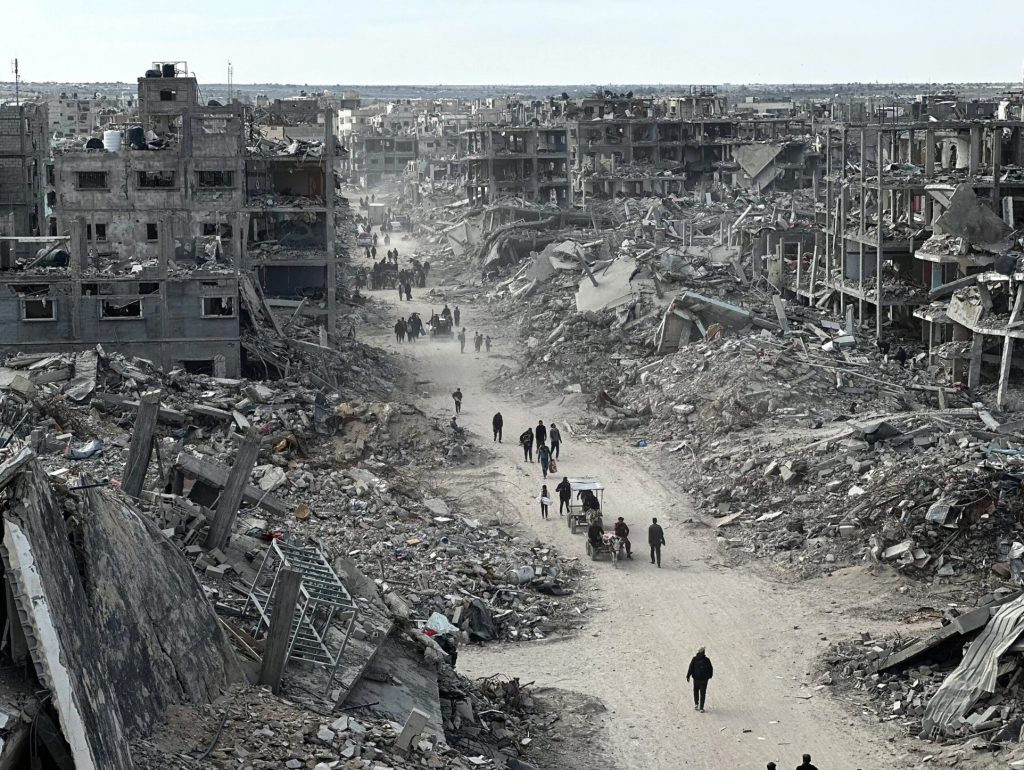
While dozens of Israeli soldiers are killed each month in a war that appears to lead nowhere – prolonged primarily for political reasons, namely Prime Minister Benjamin Netanyahu’s survival – and while hundreds of innocent Palestinians die each week and 20 living Israeli hostages remain rotting underground, the Israeli government continues to pursue unrelated political agendas.
Just a few days ago, the Ministerial Committee for Legislation advanced a private bill proposed by Likud MK Galit Distel-Atbaryan that would slash the Israeli Public Broadcasting Corporation’s (Kan) budget by 40 percent, shut down its entire TV news division, and privatize the flagship Reshet Bet current-affairs radio station. The coalition has already signaled its support in a preliminary vote, virtually guaranteeing swift approval when the Knesset reconvenes.
The draft law goes further than previous attempts: Kan’s Channel 11 would be barred from airing any news or current-affairs content, the Arabic-language channel would be closed and replaced by just six daily hours of Arabic programming, and all seats on the broadcaster’s governing council would become political appointments. Supporters say Kan should focus on “Israeli heritage and culture.” Media unions call the plan a “death sentence” for the only newsroom in Israel that is neither commercially owned nor dependent on government advertising. We’ve already reported about the Right’s Wing government political takeover here.
Meanwhile, if you’re a male filmmaker who wasn’t sent to war, expect to be discriminated against & IGNORED
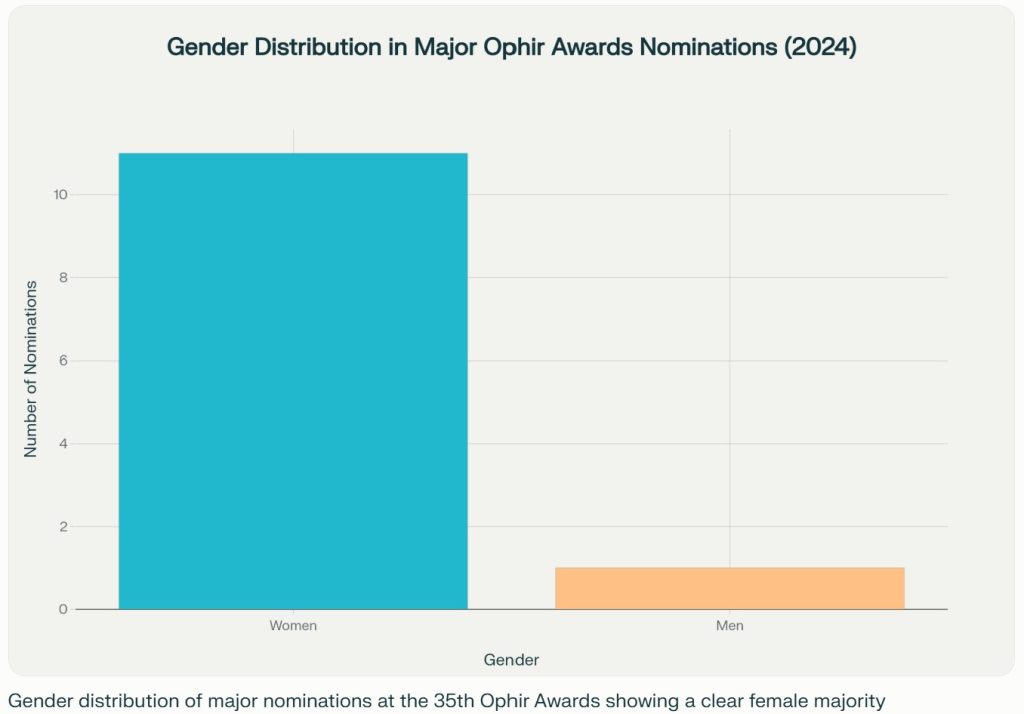
Meanwhile, if you’re an Israeli male filmmaker fortunate enough not to have been sent to war, or worse, die or be kidnapped, don’t expect funding or recognition for your work. As we’ve previously reported, while the right-wing government continues to break its own corruption records, Israel’s cultural institutions – controlled by left wing radicals – are engaging in blatant discrimination against male filmmakers, the same men sent to die in a senseless war. For several years, the Sam Spiegel Lab has reportedly been manipulated to systematically discriminate men. And now, thanks to contributions from our readers, we’ve learned that at the most recent Israeli “Academy Awards” (the Ophir Awards), 11 of the 12 major nominations – the Best Director and Best Screenwriter awards – went to women. The only male nominee among them was a Bedouin filmmaker (you could not make this up). Was it because all Israeli male filmmakers busy at war, too busy to write and direct? Or was something else at play here? Lets look at the numbers:
Latest Ophir Awards (35th ceremony, held 16 September 2024)
Categories: Best Director & Best Original Screenplay
| Category | Nominee | Gender |
|---|---|---|
| Best Director | Tom Nesher (Come Closer) | Female |
| Yosef Abu Mediam (Eid) | Male | |
| Lee Gilat (Girls Like Us) | Female | |
| Maya Kenig (Milk) | Female | |
| Mia Dreyfus (Ruler Road) | Female | |
| Best Original Screenplay | Maya Kenig (Milk) | Female |
| Bat-El Moseri (Girls Like Us) | Female | |
| Dana Modan & Rutu Modan (The Property) | Female & Female | |
| Mia Dreyfus (Ruler Road) | Female | |
| Tom Nesher (Come Closer) | Female |
Key points
- There are 11 individual nominees across the two categories (five directors, six screenwriters).
- Only one nominee is male – Yosef Abu Mediam, a Bedouin filmmaker – while the remaining ten nominees are female.
- Some filmmakers (Tom Nesher, Maya Kenig, Mia Dreyfus) are nominated in both categories, so the total number of distinct people is eight, but the total nominations listed above is eleven.
How strong is the evidence of gender bias / discrimination?
Assuming male and female filmmakers are equally talented:
P(≥ 11 women) = P(X=11)+P(X=12) = (1211)(0.5)11(0.5)1+(1212)(0.5)12 = (12+1)×1212 = 134096 ≈ 0.00317P(\text{≥ 11 women}) \;=\;P(X=11)+P(X=12) \;=\;\binom{12}{11}(0.5)^{11}(0.5)^{1} +\binom{12}{12}(0.5)^{12} \;=\;(12+1)\times\frac{1}{2^{12}} \;=\;\frac{13}{4096} \;\approx\;0.00317P(≥ 11 women)=P(X=11)+P(X=12)=(1112)(0.5)11(0.5)1+(1212)(0.5)12=(12+1)×2121=409613≈0.00317
- Probability: ≈ 0.317 % (about 1 chance in 315).
Under the simplest fairness model (50 % female probability per nomination), the chance of landing 11 women out of 12 is about 0.3%.
Such a low probability is typically read as strong statistical evidence that pure luck is unlikely to explain the pattern – i.e., some combination of gender bias, applicant-pool imbalance, or systematic factors is very probably at work. Clearly Israeli men are good for one thing only – being sacrificed as cannon fodder on the front.
And while we’re on the subject of discrimination, we recently reported that several Israeli film festivals rejected a Holocaust-themed film solely because its crew list lacked “Jewish-sounding names” – according to a report submitted by the film’s producer.
Israel’s 11 female nominees – Merit or Discrimination?
Thanks to deep ties in the Israeli film industry we’ve been able to write a number of articles about the local scene. One of these articles details how Katriel Schory, long-time legendry and first CEO of the Israeli Film Fund who had been running it from its inception for more than twenty years, allegedly approved a production grant of 1,000,000 NIS for The Last Cinema Show in Bucharest, a film connected to his wife Naomi Schory and her business partner Lodi Boken, just before the end of his tenure. We’ve published several articles about the Israeli film funds – The Rabinovich fund, Gesher, and the “Israeli film fund” , detailing a culture of revolving doors and alleged nepotism that stretch for decades.
After Katriel Schory was succeeded, first by Lisa Shiloach-Uzrad, then by Noa Regev (former head of the Jerusalem Film Festival), and Dana Blankstein Cohen was appointed as head of the Jerusalem Sam Spiegel Film School, all women, there was a sudden and significant rise in the number of female filmmakers being funded, selected, and awarded across the Israeli film ecosystem. Let’s take a closer look at part of an email we received regarding our article covering the 10th edition of the Jerusalem Film Lab, held in 2020, an event where statistical analysis revealed a 99.984% probability that gender-based bias influenced its proceedings, including the selection of the winning projects:
…. I’ve taken part of the lab in a certain capacity and can confirm that your facts are correct. There were 8 female participants and 4 male. There were indeed three “Masterclasses” (though really they were just 90 minute Zoom chats, this lab too place during covid) with established filmmakers and all three were women. There were seven jury members, six women and one man, who was the head (or artistic director?) of Tribeca, a festival known for being quite woke. All four awards went to projects led by women, and I can confirm your impression: it felt like the entire event was engineered in a way that didn’t give the men a fair chance. I say this for two reasons:
1. During the event, after one of the male participants finished his pitch, which was for a project that was backed by major international producers, the jury didn’t ask him the usual two questions like they did with all the female participants. Instead they asked just one question which was about the film’s title basically accusing him of making up a name (which wasn’t true). Later when the filmmaker spoke about the research he had done for the script the head of the jury cut him off and said, “we don’t have any proof of that” (the director doing research) which was both rude and very strange.
2. The lab was headed by a local producer who is known to be an activist. As an example for what I mean by that – during the George Floyd riots in the US this producer posted on Facebook something to the effect of “all women should unite and stand against male violence” implying something like that all men are violent or that only men are capable of violence, or something like that. I believe that after some backlash that post was deleted.
Israeli filmmakers are between a rock and a hard place. We want to support our female colleagues but what’s happening seems extreme. If they wanted to give all four awards to women they could have just announced it before or during the event and not let these poor guys prepare pitches, shoot scenes, and go through the motions. I’m pretty sure that the male filmmakers would have been fine with it. But why put up such a show? To humiliate?
Abortions Banned, Butt Plug Lessons In School Begin – a race to the Bottom (buttocks?)
Whether consciously or not, this blatant discrimination against men is a backlash from the radical-left ideologues who dominate Israel’s cultural institutions against the extreme policies of the country’s right-wing government. A similar race to the bottom is unfolding in the United States, where Democrats and Republicans keep outdoing one another’s excesses – from revoking women’s abortion rights on one side, to obliging eight-year-olds to attend drag shows and learn about Butt Plugs in school, on the other. In essence, the world is now run by deranged radicals from both sides of the political spectrum and it is only by speaking out against both that there is any chance for a change.
Tom Nesher, daughter of Avi Nesher, and the corruption of Israeli Cinema
As if war, a fascist-leaning government, a potential genocide, and radical gender discrimination weren’t enough, the latest list of female-dominated nominations at the Ophir Awards reveals yet another troubling aspect of the Israeli film industry: rampant corruption and blatant nepotism. Tom Nesher – unsurprisingly a product of the same Sam Spiegel Lab where 8 of the 12 participants, all 3 masterclass teachers, 6 of the 7 jury members, and ALL WINNERS were women (the probability of all four events happening under the assumption of a gender-neutral selection process, is just 0.0117%, meaning a 99.9883% chance for gender bias) – is the daughter of veteran filmmaker Avi Nesher. Despite being regarded by some as lacking in talent, according to Israeli film industry insiders, Avi Nesher has enjoyed carte blanche access to the Rabinowitz Film Fund, which we’ve also previously reported on extensively. This fund – one of two major public film funds in Israel that have been controlled by the same individuals for over two decades – is widely considered by industry insiders to be deeply corrupt. It is also the fund poised to benefit most from the recent public funding reforms that we’ve also covered. The reforms, which include revised criteria for film fund allocations, favor commercially-oriented films over artistic and niche productions. Documentaries, short films, student projects, and independent art-house films – long the hallmark of Israeli cinema – face severe funding cuts.
War, Censorship, and Cultural Capture – Israel’s Crises Exposes Breakdown Across Society
Decades ago, Israel was truly a remarkable country in every sense – driven by a spirit of resilience, innovation, and unity. It stood out as a beacon of democracy in a turbulent region, built by people who turned deserts into thriving cities, pioneered advances in agriculture, science, and technology, and fostered a vibrant cultural and intellectual life despite immense challenges. Those day are over.
In a campaign of calculated destruction second only in its moral depravity to Putin’s war on Ukraine, the right-wing coalition presses on, systematically dismantles press freedom through budget cuts and political appointments to public broadcasting, while the cultural radical left establishment appears equally captured by ideological extremism that prioritizes insane gender quotas and discrimination against men, over merit, on top of a heavy dose of nepotism and corruption.
This institutional breakdown – where media independence dies under government pressure while artistic excellence becomes secondary to demographic engineering – represents a failure of Israeli society to maintain the democratic norms and meritocratic principles that once distinguished it in the region.
As soldiers fall on distant battlefields and hostages remain in captivity, the energy devoted to these cultural and media wars exposes a political class more invested in controlling narratives than life itself. The tragedy is that both sides of this cultural battle are winning – at the expense of the democratic society they claim to defend, the lives of Israeli soldiers, regional security, and the lives of tens of thousands of Palestinian children.
An unrelated excerpt from today’s Israeli newspaper, reporting on heavy machinery operations in the Gaza Strip:
On social media, there are quite a few videos showing the activities of those involved in demolishing buildings in the Gaza Strip. “The owner of the equipment I operated was paid 5,000–5,500 shekels per day,” says Gadi (a pseudonym), who operated heavy machinery in Gaza for a year. “At first, I did it for the money. Later, for revenge. The work there is hard and very unpleasant. The army doesn’t operate with any sense. It just wants to destroy as much as possible and doesn’t care about anything. I worked for a salary. I don’t have the money to buy a machine that costs a million and a half shekels. I was taking home a salary of 30,000 shekels a month, I got a company car, and they rented me an apartment in Ashkelon.”
Israel, RIP.
A follow-up to this article is published here:
Related VIDEOS:
New Rule: Guilt By Civilization | Real Time with Bill Maher (HBO)


Related Posts

2 Comments
-
Concerned
Just a tip; Sundance and NYU, one of the most expensive film schools in the world, are joined at the hip. In the 2023 competition, for example, 42% of the selected directors were Black female NYU students and alums. A strange version of social justice when all of those directors went to the same extremely expensive school. Some other thoughts: there was only one heterosexual male director in competition at Sundance this year, even though probably 60% of the submissions fit that profile. The shorts are likely just as bad, at least the US ones. A look at the labs will also likely reveal a lot of this, both the NYU stuff and the discrimination. Thanks!

Israeli filmmaker
משקף את המציאות לגמרי. פשוט מוציא את כל החשק לנסות בכלל ליצור. אגב גם דברים אחרים כמו למשל אנשים שמקבלים טונה כסף עם תסריטים עלובים כמו של נדב לפיד או אבי נשר, או דברים תת רמה או לשניים וחצי אנשים. תודה